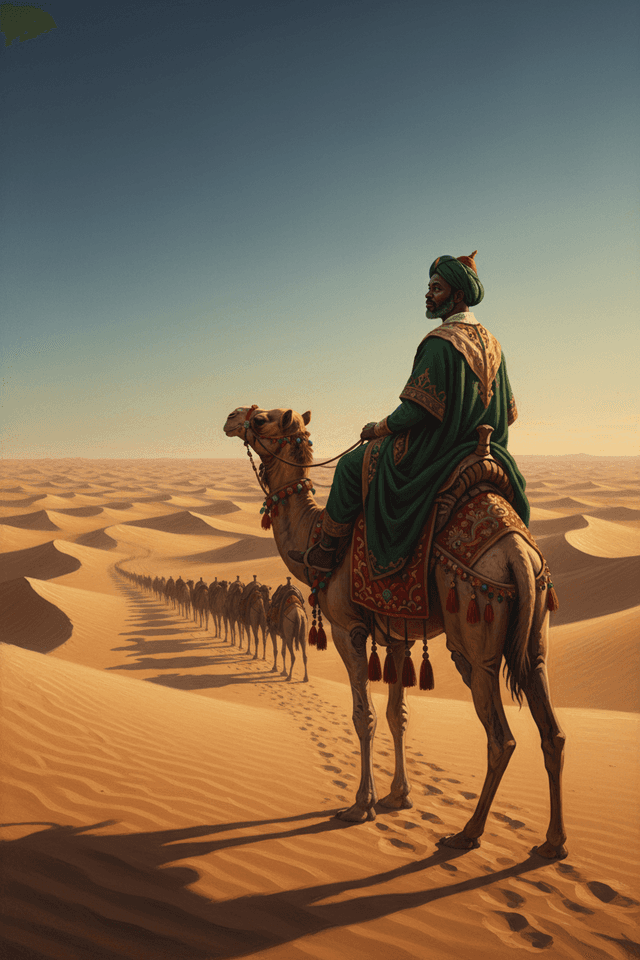
Mansa Musa, ruler of Mali, set out on the long journey to Mecca in the fourteenth century. The pilgrimage was an act of faith, but it was also a major journey through the connected worlds of West Africa, North Africa, and the Islamic Middle East. His caravan traveled through the Sahara and reached Cairo, where his arrival drew great attention.
The movement of people and wealth on the journey showed how closely distant regions were linked. Mansa Musa's spending of gold in Cairo became part of the historical memory of the pilgrimage, although later stories often make the exact amounts sound more certain than the evidence allows. What is less disputed is that his journey made Mali more visible to people far beyond West Africa.
After the pilgrimage, Mansa Musa's rule was associated with patronage of learning and Islamic institutions. Timbuktu grew in importance as a center of scholarship. His story is therefore more than a tale of wealth: it is a story of pilgrimage, cultural exchange, and how one ruler's journey connected places that many people imagined to be far apart.