By 49 BCE Julius Caesar had spent years commanding Roman forces in Gaul. Political rivals in Rome wanted him to disband his army and return without the military power that had made him influential. Caesar faced a choice: obey the demand and risk losing his position, or cross the legal boundary that separated his command from Italy with an army.
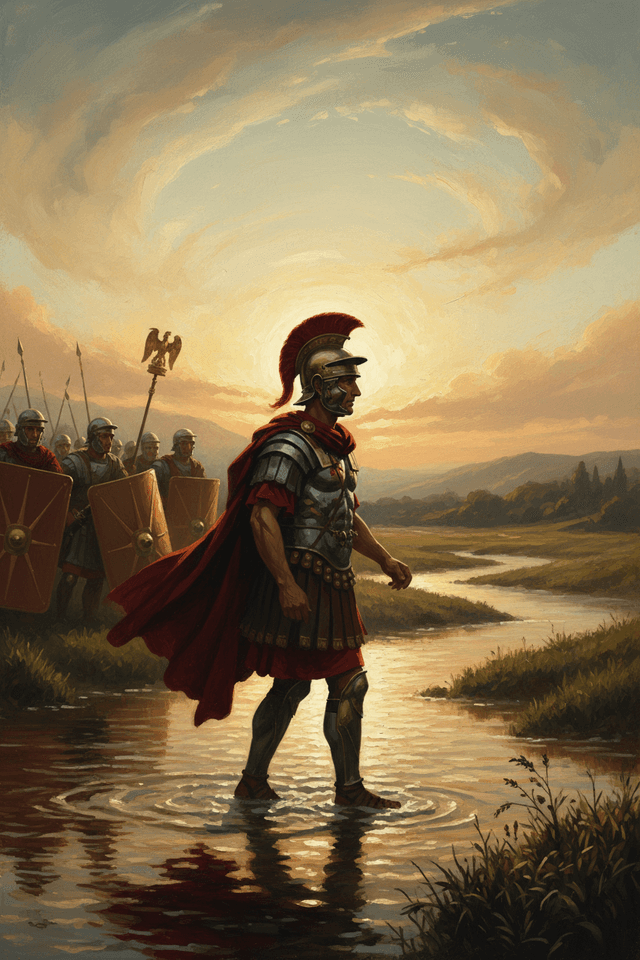
He chose to cross the Rubicon with troops. The river itself was small, but the political meaning of the crossing was enormous. In the Roman system, bringing an army into Italy under these circumstances was an act of open conflict. Caesar then advanced toward Rome while Pompey and many senators withdrew, and civil war followed.
The story survives because a small physical action changed the course of a republic. The river was not the largest obstacle Caesar ever faced. Its importance came from the decision it represented: once the army crossed, there was no easy return to the old political situation. That is why “crossing the Rubicon” became a phrase for an irreversible decision.