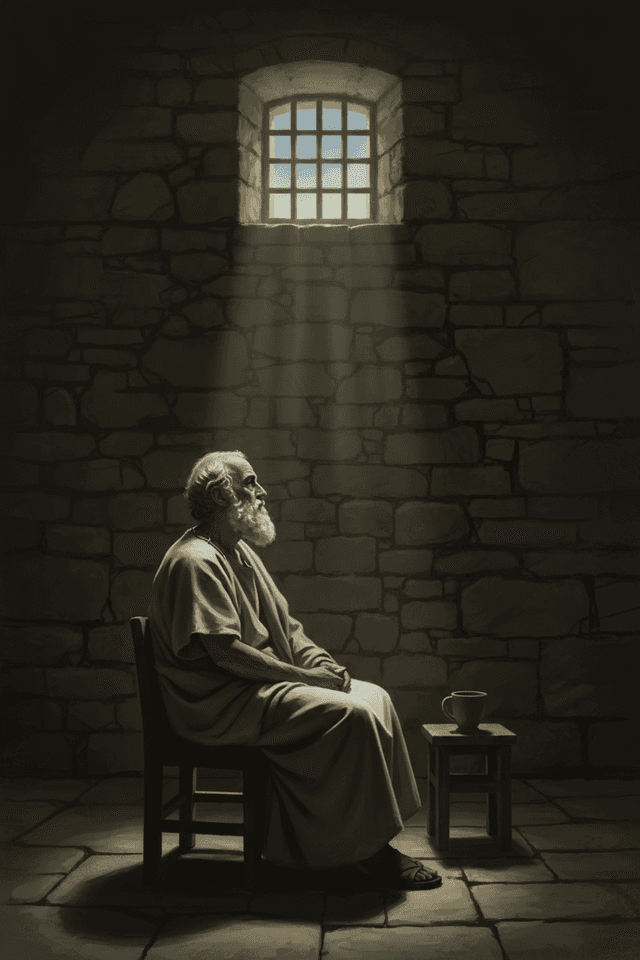
In 399 BCE the city of Athens tried Socrates, a philosopher famous for questioning people about virtue, knowledge, and the way a person should live. He was found guilty and sentenced to death. Socrates was offered opportunities to escape according to the literary tradition preserved by Plato, but the surviving accounts present him as choosing to remain within the judgment of the city.
On his final day, the story moves away from the courtroom and toward conversation. Plato's account presents Socrates discussing the fate of the soul and the demands of philosophy with his friends. The end comes with the administration of hemlock, after which the philosopher dies in prison.
Historians must be careful here. Socrates wrote nothing himself, and the surviving narratives are shaped by the authors who remembered or portrayed him. Yet the trial and death are central to the historical memory of Athens. The story remains powerful because it asks a difficult question: what should a person do when personal conviction, law, and the cost of obedience pull in different directions?