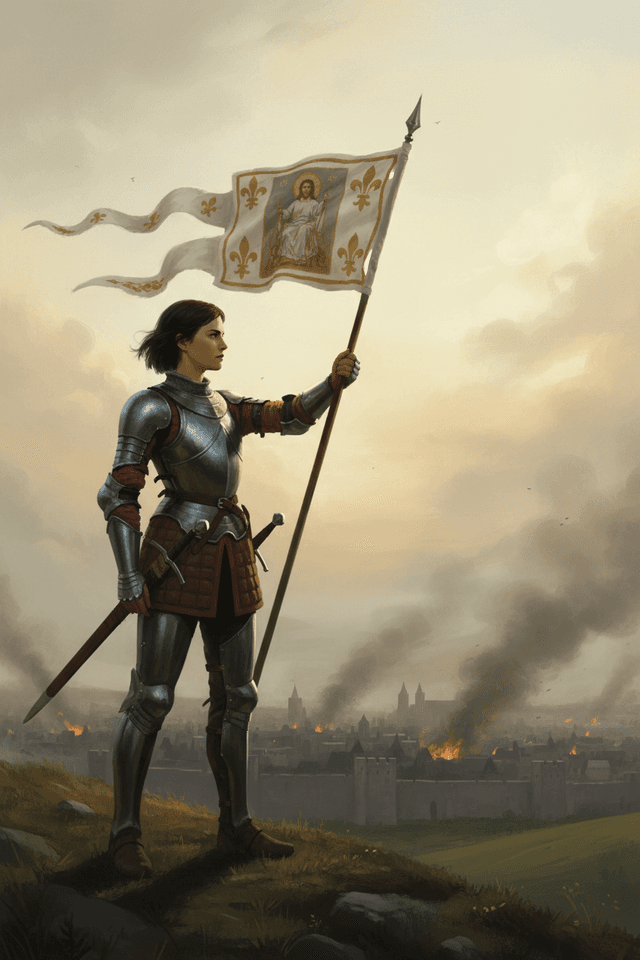
In 1428 and early 1429, Orléans was under siege during the long conflict between England and France. The city's position mattered because its loss would have threatened the remaining French resistance. Into this crisis came Joan, a young woman from rural France who said she had received a divine calling to support the French cause.
Joan reached the French army and became part of the effort to lift the siege. Fighting remained dangerous, and she was wounded, but the French forces attacked several English positions around the city. In early May 1429 the siege was broken. Joan's presence became closely linked with the change in French morale and the success of the relief campaign.
Her later capture and execution in 1431 did not erase the memory of what happened at Orléans. Centuries of retelling transformed Joan into a symbol with both historical and religious dimensions. A careful story must keep those layers visible: the military events belong to history, while later interpretations of her mission belong to devotional and cultural tradition.