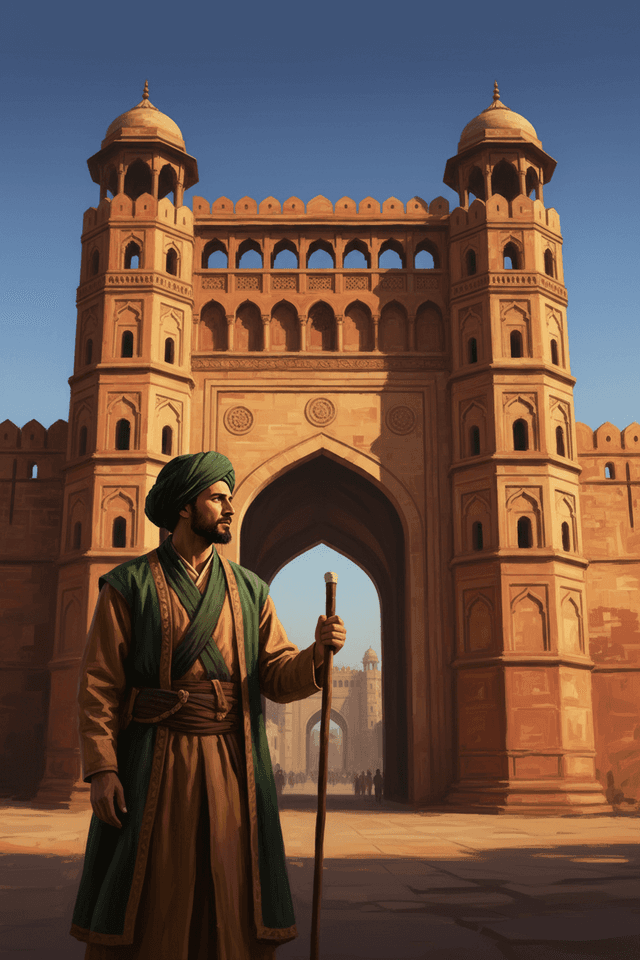
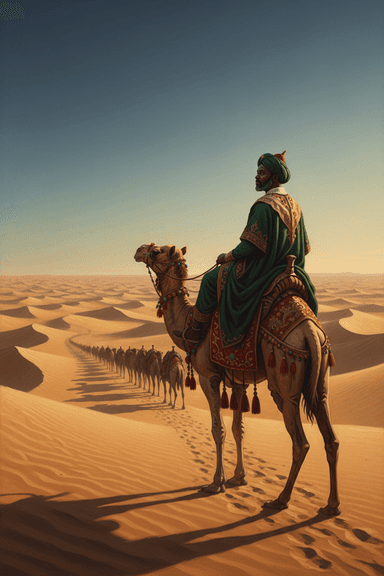
Ibn Battuta left Tangier in 1325 intending to make the pilgrimage to Mecca. The journey grew far beyond his first plan. After years of travel, he reached the Indian subcontinent and eventually came to Delhi, the capital of the Tughluq dynasty. There he entered the service of Sultan Muhammad bin Tughluq and was appointed as a judge.
Delhi was a world of courts, scholars, soldiers, merchants, and travelers. Ibn Battuta observed its institutions and customs while also living inside the political uncertainty of the period. In 1341 he left Delhi with an assignment connected to a diplomatic mission toward China, beginning another stage of his long travels.
His importance comes not only from the distance he covered but from what he recorded about the people and places he encountered. The Rihla is both a travel narrative and a window into fourteenth-century connections across Africa and Asia. His life shows how pilgrimage, scholarship, government service, and travel could intersect in one person's journey.