In 218 BCE Carthaginian commander Hannibal chose an unexpected way to take the war to Rome. Instead of relying only on routes where Roman forces could anticipate him, he led his army northward and toward the Alps. The journey demanded a march through difficult mountain country at the start of a campaign meant to surprise Rome.
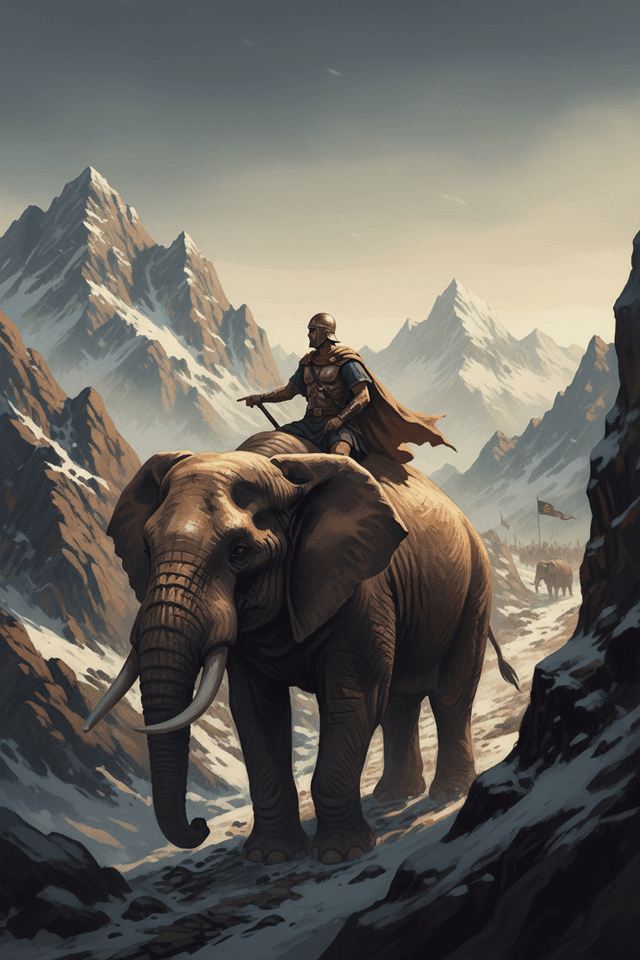
The army had to cross steep ground, narrow paths, unstable slopes, and harsh weather. Hannibal also brought war elephants, animals that later became one of the most famous images of the campaign. Ancient writers disagree about the exact route and losses, but they agree on the central fact: the Carthaginian army succeeded in getting through the Alps and reached Italy.
The crossing did not by itself decide the war, but it changed the strategic situation. Rome now faced an enemy army arriving from an unexpected direction. Hannibal's story became a lasting example of endurance and strategic imagination, while also reminding later generations that bold plans can demand enormous human and material costs.