The house on the quiet, tree-lined street in Kaunas, Lithuania, does not look like the setting of a great rescue. It is a modest two-storey building with a small garden and a gate. Today it is a museum. On a grey autumn morning, a girl named Aiko and her grandfather, both visitors from Japan, stood at that gate. The two of them are imagined for this telling, but everything they learn inside is history.
"This is where it happened?" Aiko asked. She had expected something grander.
"This is where it happened," said her grandfather. "In the summer of 1940, this was the Japanese consulate. And one morning, the street outside was so full of people that the consul could hardly see the end of the crowd."
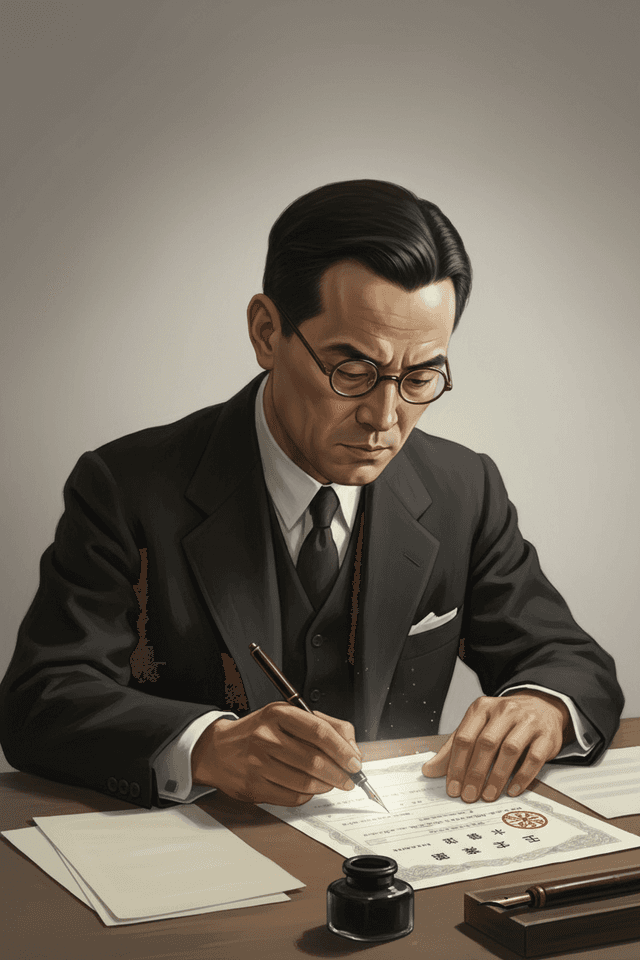
Inside, the museum keeps a small office as it might have looked then: a wooden desk, an inkwell, a fountain pen, a stack of papers. On the wall is a photograph of a slim man in a dark suit and round glasses. His name was Chiune Sugihara.