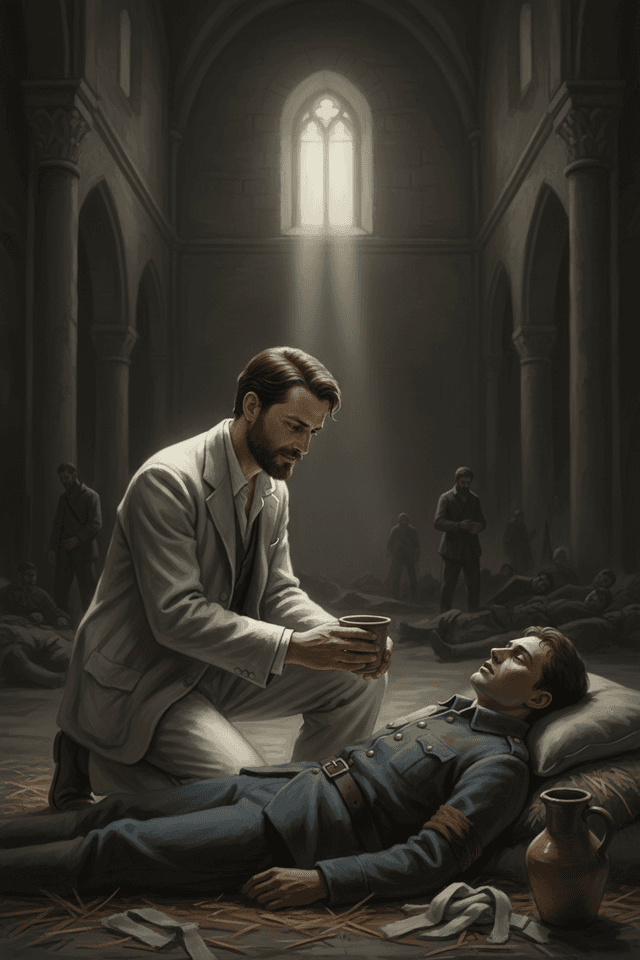
On the evening of the twenty-fourth of June, 1859, a Swiss businessman in a white travelling suit arrived in the small town of Castiglione delle Stiviere, in the hills of northern Italy. His name was Henry Dunant. He was thirty-one years old, and he had not come for any battle. He had come on business. What he found there would change his life, and in time it would change the way the whole world treats people wounded in war.
Dunant was from Geneva. He had grown up in a devout Protestant family that believed faith should be shown through helping others. As a young man he visited prisoners in Geneva's jail with a charitable society, and he helped found the Geneva branch of the Young Men's Christian Association. But he was also ambitious. He had started a company to grow grain and run mills in Algeria, which was then ruled by France, and his business was in trouble because he could not get the land rights he needed. He decided to take his case directly to the French Emperor, Napoleon the Third.