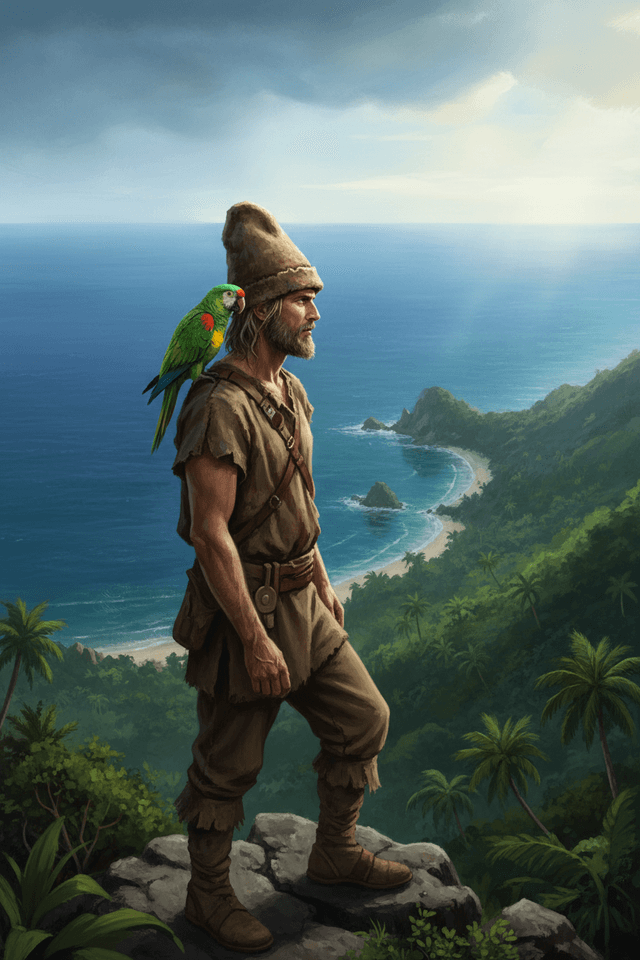
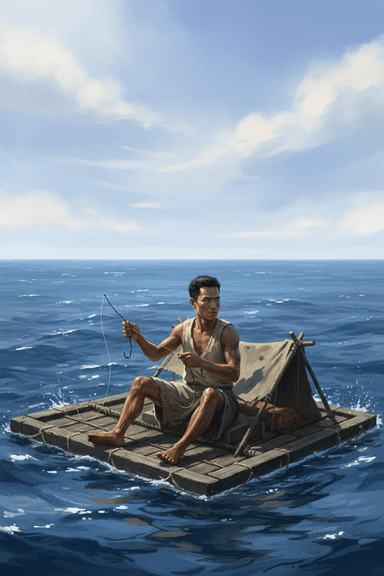
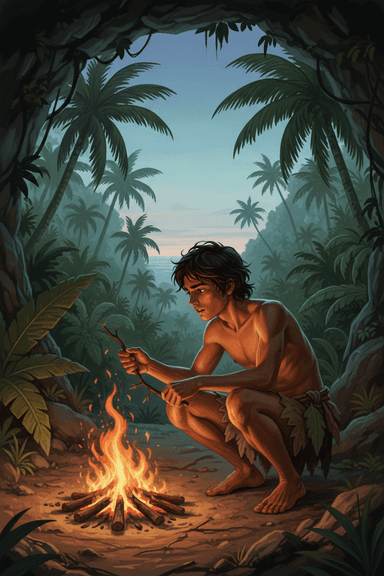
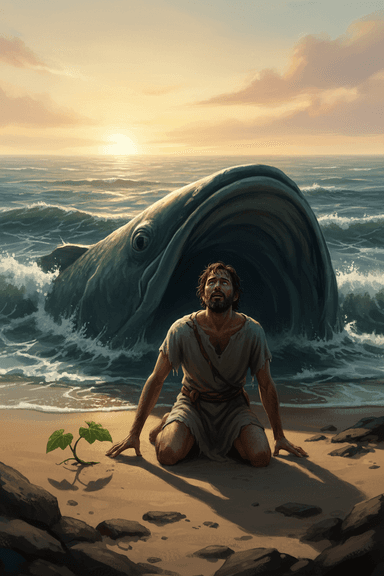
On the thirtieth of September, in the year 1659, a young Englishman named Robinson Crusoe was thrown onto a strange beach by the sea. He crawled up the sand on his hands and knees, coughing salt water, and lay there looking up at the sky. Behind him the waves still roared. Somewhere out in that grey water were the ship he had sailed on and every man who had sailed with him.
He had left Brazil weeks earlier on a trading voyage across the Atlantic. A hurricane had caught the ship and driven it far off course, and at last a great wave had overturned the little boat in which the crew tried to reach the shore. Crusoe had been tumbled under the water again and again, until one last wave flung him onto the rocks. When he stood up and looked around, he understood that he was the only one left alive.
"Lord, have mercy," he whispered. "Why am I saved, when all of them are gone?"
He had nothing with him but a knife, a pipe and a little tobacco in a box. That first night, afraid of wild animals, he climbed into a thick tree and slept wedged among its branches.