North of Siberia, where the Chukchi Sea meets the East Siberian Sea, there is an island of rock, tundra and wind called Wrangel Island. For most of the year it is locked in ice. Walruses haul themselves onto its beaches, snowy owls hunt across its hills, and polar bears come ashore to rest and raise their cubs. Thousands of years ago, it was one of the last places on Earth where woolly mammoths lived. In 1921, no people lived there at all.
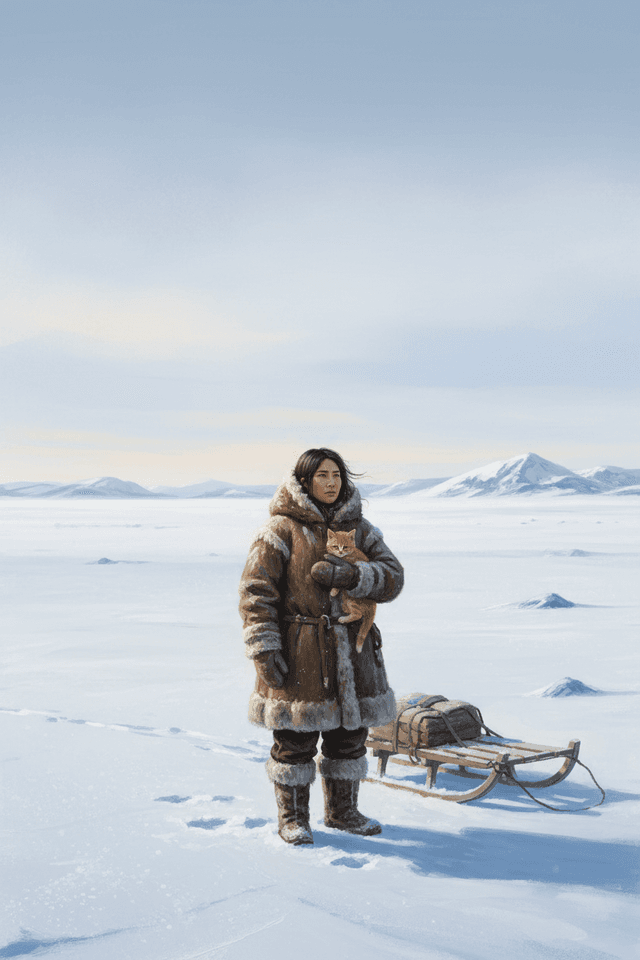
That September, five people were set ashore on Wrangel Island to begin an expedition. Four of them were young men, eager for adventure. The fifth was a quiet Iñupiaq woman named Ada Blackjack, and she had come for a very different reason. She had come for her son.
Ada was born in 1898 at Spruce Creek, near the small settlement of Solomon on the Seward Peninsula of Alaska. When she was eight years old, her father died, and her mother sent her to a Methodist mission school in the town of Nome. There she learned to read English and to sew, and sewing became the skill that would one day carry her across the sea.