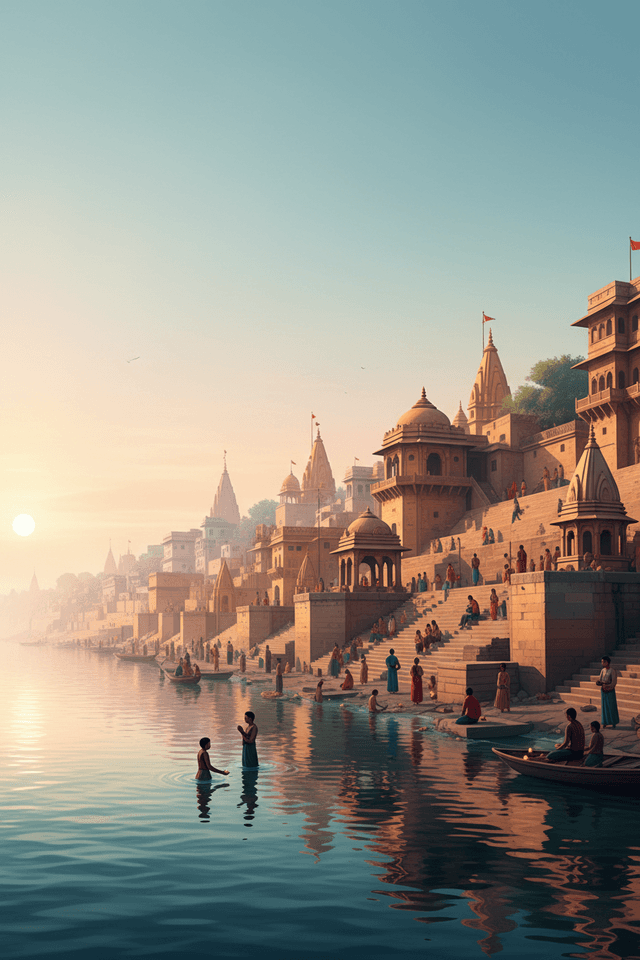
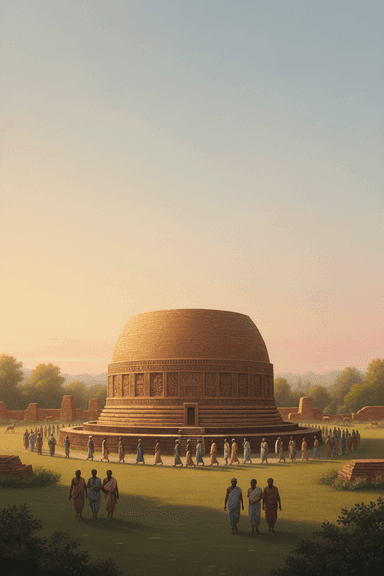
On the banks of the river Ganga in northern India, long flights of stone steps called ghats lead down to the water. At dawn, pilgrims bathe and offer flowers; at dusk, priests raise great brass lamps in the Ganga aarti. This is Varanasi, also called Kashi, the city of light, and Banaras. Many Hindus regard it as the holiest city of all.
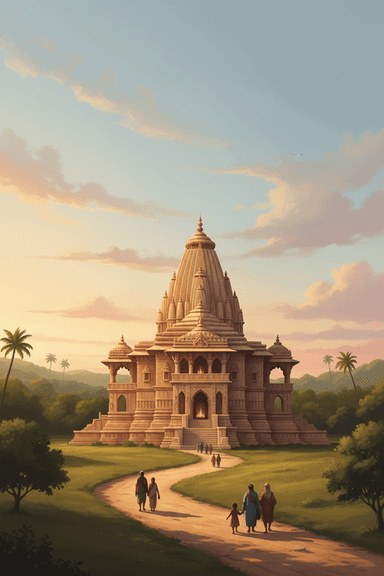
Hindu tradition tells a story of how Shiva revealed his greatness. According to the Shiva Purana, the gods Brahma and Vishnu once argued about which of them was supreme. Suddenly a vast pillar of fire appeared between them, stretching beyond sight above and below. Vishnu took the form of a boar and dug downward to find its base; Brahma took the form of a swan and flew upward to find its top. Neither reached an end. Then Shiva revealed himself from within the pillar of light, and both honoured him. The places where Shiva is worshipped in this form of light are called jyotirlingas, and the Kashi Vishwanath temple, the temple of the Lord of the Universe, is counted among the twelve.