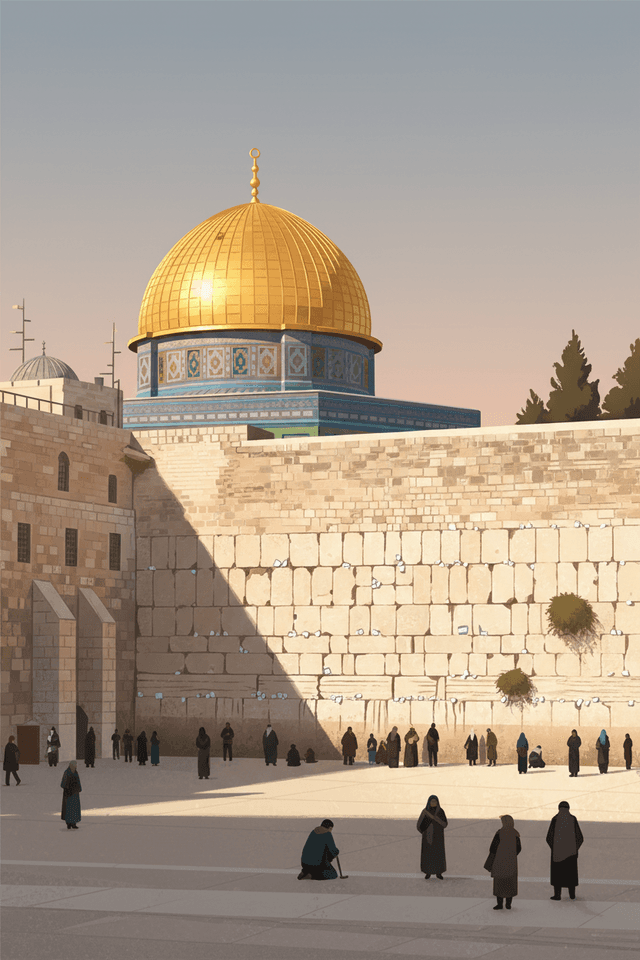
In the Old City of Jerusalem, a great wall of massive, pale stone blocks rises above a wide open plaza. Small folded papers are tucked into the cracks between the stones; they are prayers. This is the Western Wall, in Hebrew the Kotel. It stands at the edge of one of the most sacred and most sensitive places in the world: a raised platform that Jews call the Temple Mount and Muslims call al-Haram al-Sharif, the Noble Sanctuary.
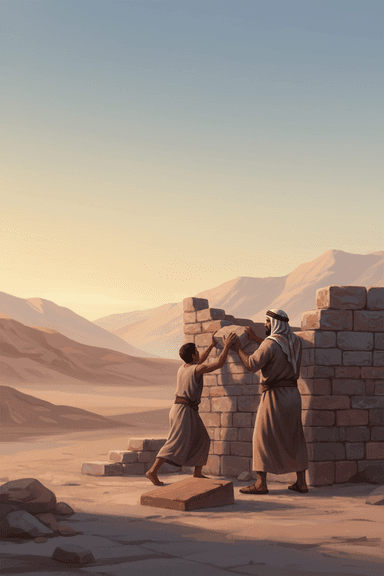
The history of the wall itself is fairly clear. In the late first century BCE, King Herod the Great greatly enlarged the platform around the Second Jewish Temple, building huge retaining walls to hold it up. In the year 70 CE, during a revolt against Rome, the Roman army destroyed the Temple. The retaining walls largely remained, and over the centuries the western stretch became a place where Jews came to mourn the loss of the Temple and to pray.