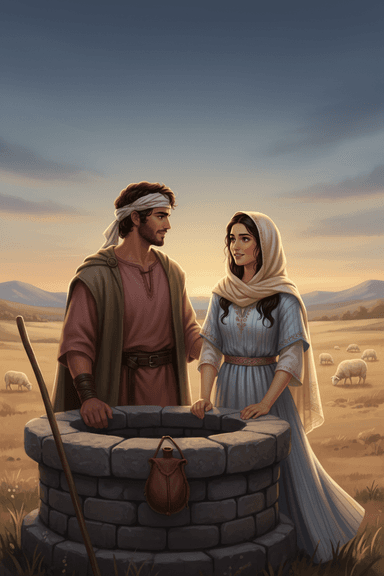
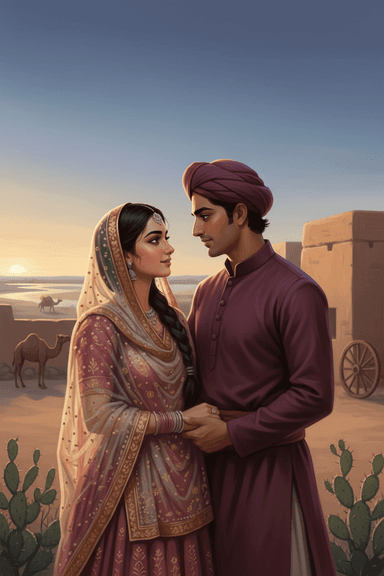
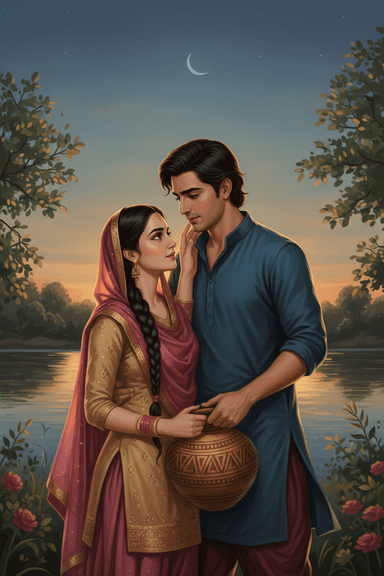
On the banks of the river Chenab in Punjab lived a young man called Dheedo, of the Ranjha clan, the youngest son of a landowner in Takht Hazara. His father had loved him dearly, but after the father died, his elder brothers took the best fields for themselves, and their wives teased him for being idle. Hurt and lonely, Ranjha left home with nothing but his flute.
This is the story as the poet Waris Shah told it in Punjabi verse in 1766. The tale was older and was sung by others before him, but his qissa became the version that Punjabis on both sides of today's border still recite.
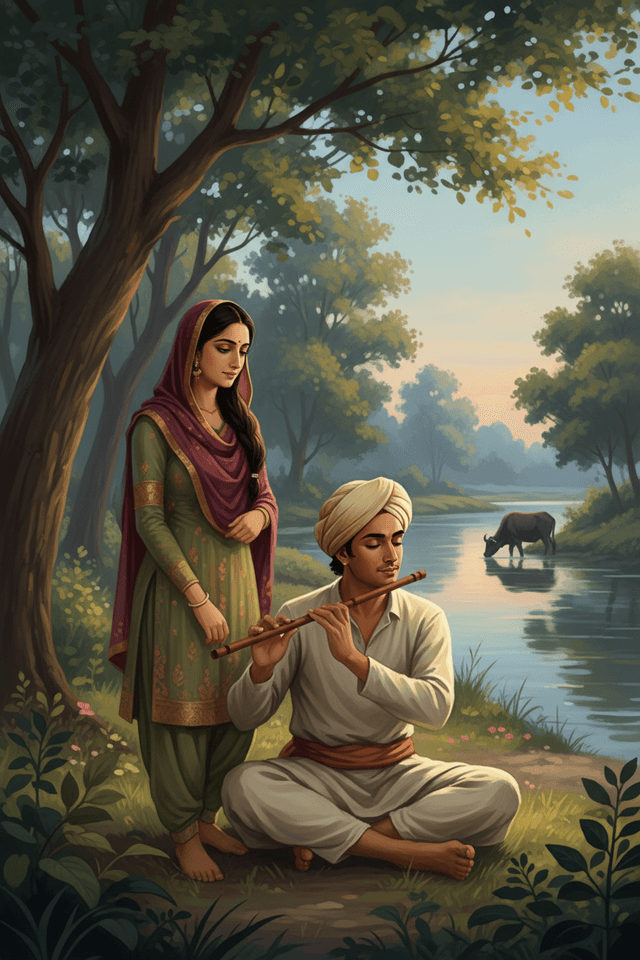
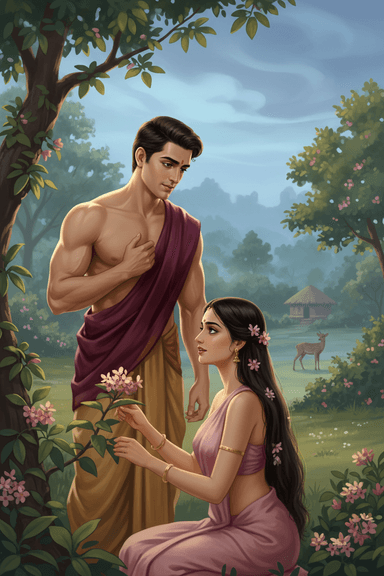
After a long journey, Ranjha reached Jhang, the land of the Sial clan. There he met Heer, the beautiful and spirited daughter of the chief, Chuchak. Moved by his music and his gentle nature, Heer arranged for him to be hired to graze her father's buffaloes. Every day Ranjha took the herd to the riverside forest and played his flute, and Heer came to bring him food. Their love grew quietly among the trees.