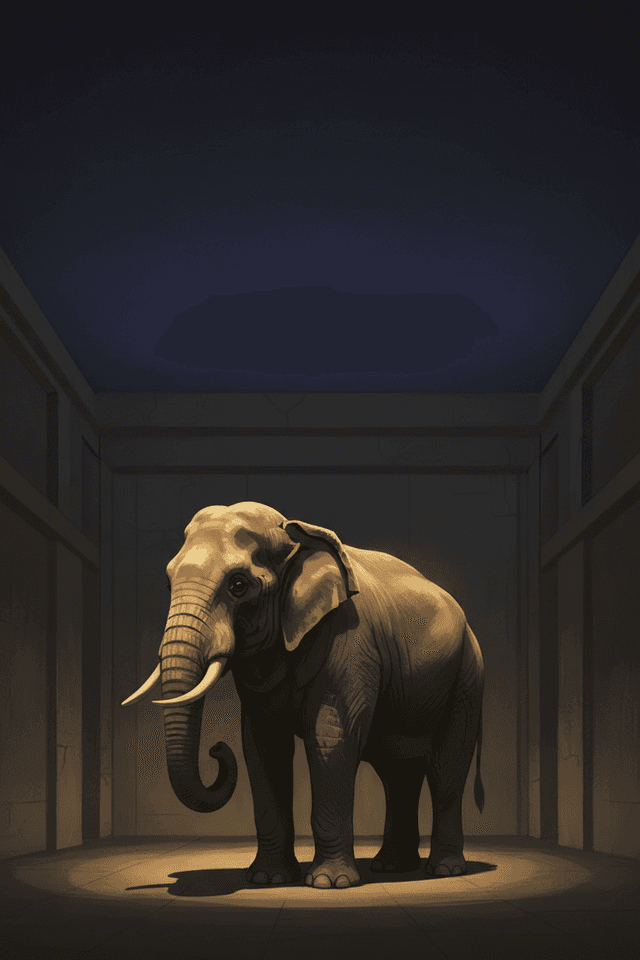
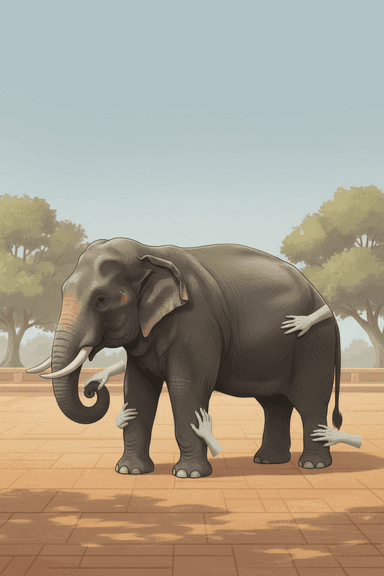
An elephant was brought into a dark room so people could experience it. Because they could not see the animal, each person reached out a hand to discover its shape. One touched the trunk and imagined a long pipe. Another touched an ear and thought of a fan. Someone touched a leg and imagined a pillar.
Each description seemed convincing to the person who had touched that part. Because the room remained dark, no one had the complete picture. Their disagreement came not from having no experience, but from treating a partial experience as if it were the whole truth.
Rumi uses the story as a meditation on limited perception and knowledge. The wisdom is a warning against mistaking one perspective for total understanding. It also encourages humility: seeing one part clearly does not mean that we have seen everything.