For a month, a Muslim family has organized its day around Ramadan: the pre-dawn meal, fasting during daylight, prayer, work, study, and the evening meal that breaks the fast. As the month comes to an end, the family prepares for a different kind of morning.
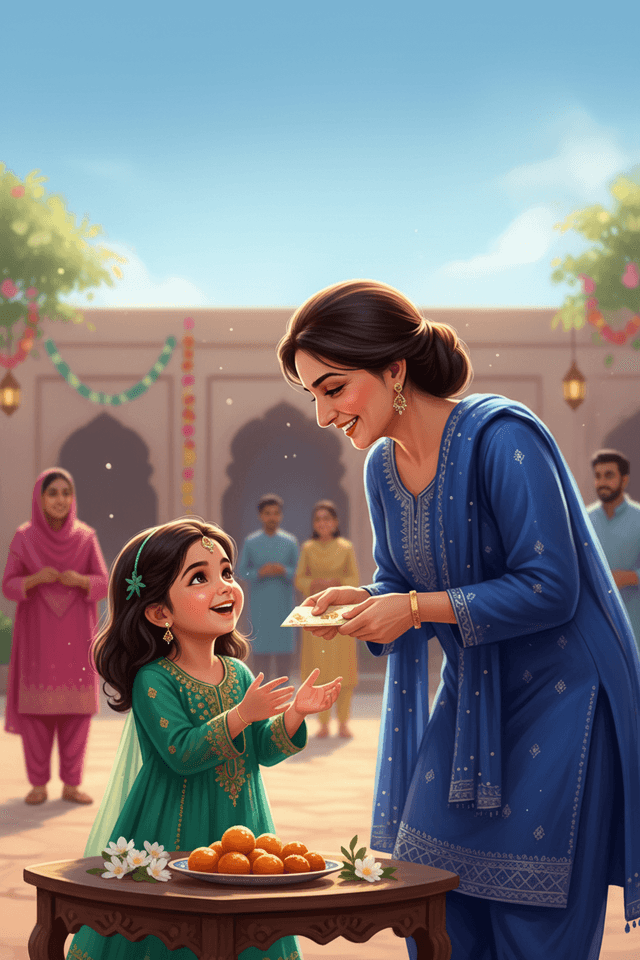
On Eid al-Fitr, people put on clean or special clothes, gather for prayer, greet one another, and share food. Giving charity is also an important part of the period, with many communities emphasizing support for people who may have less than they need. The celebration is communal rather than private: neighbors, relatives, friends, and congregations become part of the morning.
The story of Eid is therefore not a tale about one historical hero. It is a yearly rhythm of worship, gratitude, charity, and reunion. Its meaning is carried through ordinary actions repeated across generations: finishing a month of discipline, remembering God, feeding others, and making room for joy.