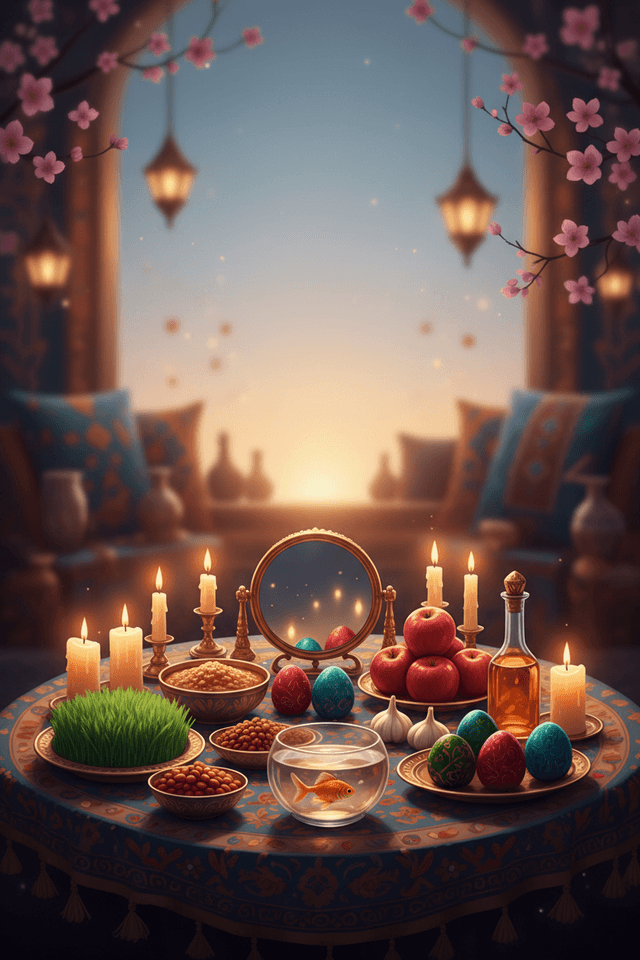
As winter gives way to spring, families prepare for Nowruz by cleaning their homes, visiting relatives, arranging symbolic displays, and sharing meals. The festival marks a new year and is associated with renewal, freshness, and the return of spring.
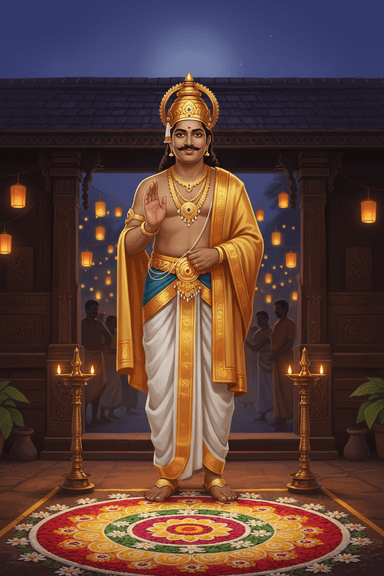
Persian literary tradition also tells a legend linking Nowruz with Jamshid, a king of ancient times. In Ferdowsi's Shahnameh, Jamshid has a jewelled throne raised into the sky, shining like the sun, and the people name that day Nowruz, "the new day." The story belongs to the cultural world of Persian epic and legend, not to a simple historical record.
Across communities, the exact customs differ, but the central rhythm is recognizable: old things are cleared away, families reunite, and a new cycle begins. Nowruz survives because a calendar date becomes a lived story of renewal repeated every year.