In Khurja, the town of potters, the morning begins with smoke. Long before the shops open, the kilns behind the narrow lanes are already breathing, and the air carries a warm, earthy smell, like rain falling on hot clay. Stacks of cups and plates and jars wait outside the workshops in rows of blue and white and brown, shining softly in the early light.
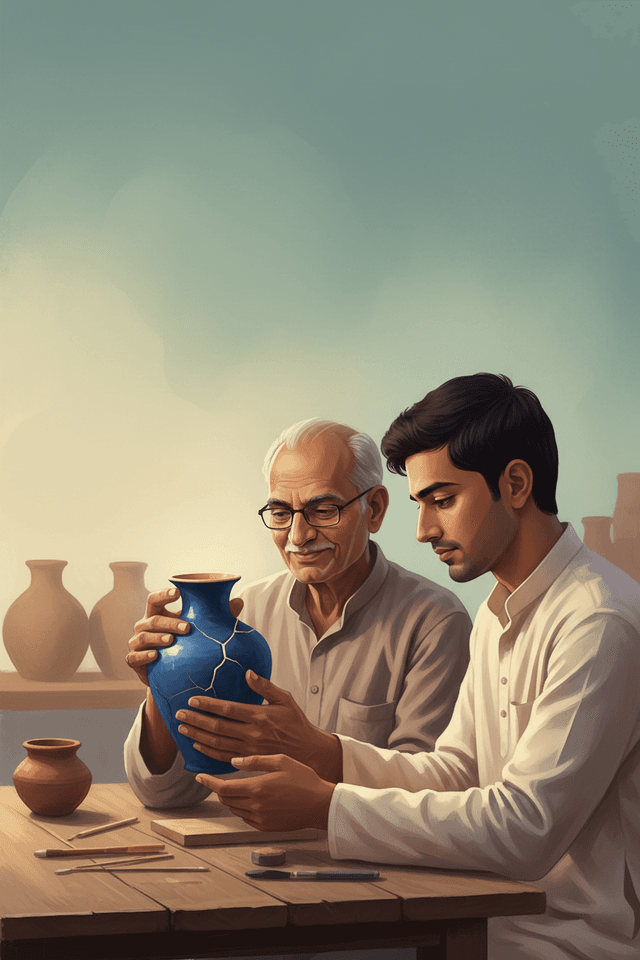
In one of those workshops, at the end of a lane where a bent old peepal tree grew out of a broken wall, worked a young potter named Arjun.
Arjun was twenty two and very good with his hands. He could centre a lump of clay on the wheel faster than anyone in the workshop. He could pull a tall, thin wall of clay upward until it seemed to float. People who came to buy pottery often stopped at his wheel just to watch him. And Arjun liked that. He liked being fast, being skilled, being admired.