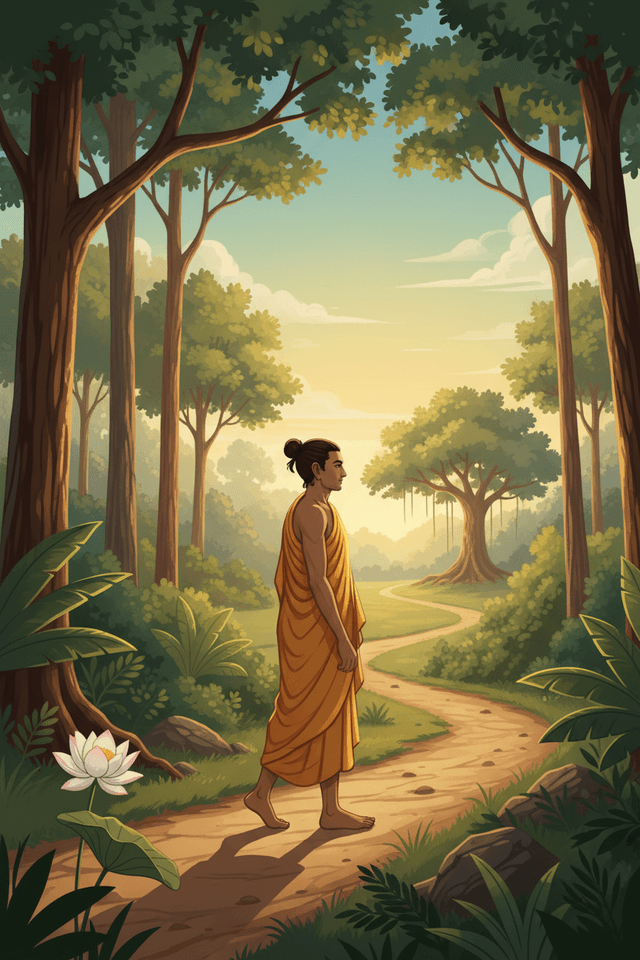
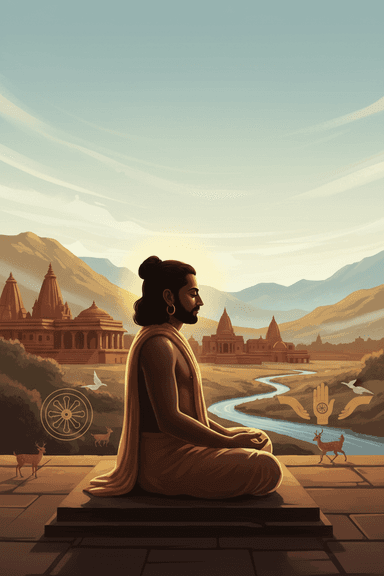
Gautama, the teacher later known as the Buddha, lived in northern South Asia many centuries ago. Buddhist traditions remember him as a person who was raised in comfort but became deeply concerned with the realities of aging, illness, and death. The historical details of his early life are difficult to establish precisely, because the written accounts were preserved after a long period of oral transmission.
The central turning point in the traditional biography is renunciation. Gautama left his former life and joined the wandering ascetics who searched for liberation. After years of practice, he rejected extremes of self-indulgence and severe austerity and pursued what Buddhist tradition describes as a middle way. He eventually attained awakening and became the Buddha, meaning “awakened one.”